
Choosing the right country for medical education is an important decision for Indian students planning…
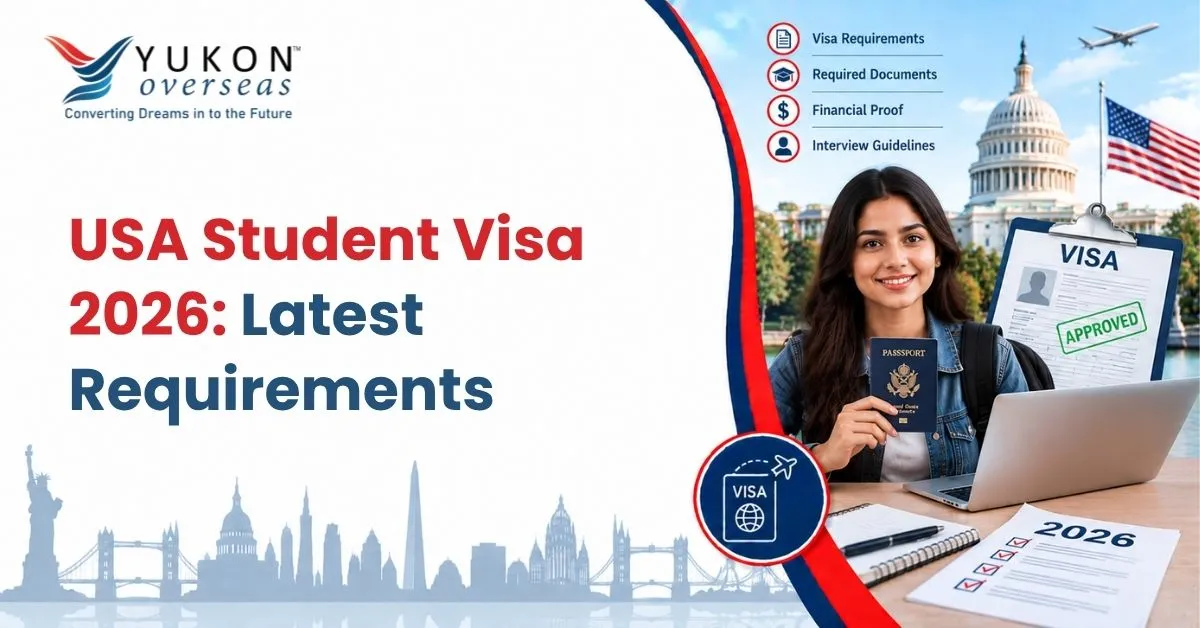
Planning to study in the United States requires more than securing admission to a university. International students must understand the appropriate Student Visa, prepare the required documents, demonstrate financial readiness, and complete the visa application and interview process. For 2026, students also need to pay attention to important changes affecting the duration of F-class admission and maintaining student status.
USA Student Visa Guide
A Student Visa allows eligible international students to enter the United States for approved academic or vocational study. The main visa categories include:
- F-1 Student Visa: For academic study at an accredited college, university, or English-language institute.
- J-1 Exchange Visa: For eligible exchange programs, including certain school and university programs.
- M-1 Student Visa: For vocational or other non-academic study and training.
For most students pursuing university-level academic programs, the F1 Student Visa is the primary category.
USA Student Visa Requirements for 2026
Before applying for a USA Student Visa, students generally need to meet several requirements:
1. Admission to a SEVP-Certified Institution
Students must first apply to and receive acceptance from a school certified by the Student and Exchange Visitor Program (SEVP). After acceptance, the institution issues Form I-20, which contains important information about the student’s program and forms part of the visa process.
2. Valid Passport
A valid passport is required for the application. The IDP reference states that the passport should generally remain valid for at least six months beyond the intended period of stay, subject to applicable country-specific agreements.
3. DS-160 Confirmation
Applicants must complete the non-immigrant visa application and submit the DS-160 confirmation page with the required documents.
4. Financial Evidence
Students need to demonstrate that they have sufficient funds to support their education and living expenses. Depending on the circumstances, supporting evidence can include bank statements, sponsor undertakings, scholarships, or other financial documentation.
5. English Proficiency
US institutions may require proof of English proficiency as part of admission. The IDP source notes that many US educational institutions require an IELTS score of 6.5, although requirements can vary by institution and program.
Documents Required for a USA Student Visa
A USA Student Visa application generally involves documents such as:
- Valid passport
- Form I-20
- DS-160 confirmation
- SEVIS fee payment evidence
- Visa application fee payment evidence
- Passport photograph in the required format
- Academic transcripts, diplomas, degrees, or certificates
- Financial evidence
- Scholarship or sponsorship documentation, where applicable
- Documents requested for the visa interview
Additional documentation may be required depending on the student’s circumstances. Applicants should check the latest official requirements before submitting their application.
USA Student Visa Application Process
The USA Student Visa process generally begins after receiving admission and Form I-20.
Step 1: Receive Form I-20
After acceptance by the SEVP-certified institution, the student receives Form I-20 and completes the required SEVIS-related steps.
Step 2: Pay the Required Fees
Students need to complete the applicable SEVIS and visa fee payments before proceeding with the appointment process.
Step 3: Complete DS-160
The DS-160 must be completed accurately, and its confirmation page should be retained for the visa process.
Step 4: Prepare for the Interview
Applicants may need to attend a personal interview at the US embassy or consulate. Students should be prepared to explain their academic plans, financial arrangements, and reasons for choosing their program and institution.
Planning to study in the USA? Contact Us for guidance on university selection, applications, documentation, and Student Visa preparation.
USA Student Visa Fees and Costs
Visa-related costs can include the visa application fee and SEVIS fee. The IDP reference lists a US$160 visa application fee and notes SEVIS fees of US$350 for F and M applications and US$220 for most J applications. Because fees can change, applicants should verify the applicable amount before payment.
The overall cost of studying in the USA will also include tuition, accommodation, living expenses, insurance, travel, and other education-related costs. Students should therefore plan their complete education budget rather than considering only the Student Visa application charges.
What Has Changed for F-1 Students in 2026?
One of the most significant updates described in the 2026 ApplyBoard reference concerns the move away from the previous Duration of Status framework. These changes are particularly relevant for international students applying for or holding an F-1 Student Visa in 2026.
Starting September 15, 2026, the source states that F-class admission will be tied to the length of the student’s study program, using the program duration shown on Form I-20. Under the updated framework, F visas can last up to four years, with additional 30-day periods connected to arrival and departure. Certain programs, such as English-language training and public high-school study, have different limits.
Students admitted before September 15, 2026 are covered by transition provisions described by the source, including specific rules concerning their program end date and authorized practical training.
What If Students Need More Time?
Students who need additional time to complete their program, begin a new program, or complete eligible practical training may need to apply for an Extension of Stay (EOS) through USCIS. For students whose Student Visa period does not provide enough time for their specific circumstances, the Apply Board reference states that this process can involve Form I-539 and, in some cases, coordination with the student’s designated school official.
Students considering an extension should contact their institution’s international student office early because the applicable process depends on their situation. Early guidance can help students understand the requirements associated with extending their stay and continuing their studies in the USA.
Rules for Maintaining F-1 Student Status
Getting a Student Visa is only one part of studying in the US. Students must also follow the conditions associated with their status.
Students are expected to maintain their required course load and communicate with their designated school official if they face difficulties completing their program. If a program cannot be completed by the date on Form I-20, students should discuss a possible extension with their DSO.
The 2026 updates described by Apply Board also address changes to educational level, academic major, and transfers between institutions. The rules can differ depending on whether the student is below or at the graduate level.
Frequently Asked Questions
Applicants generally need admission to a SEVP-certified institution, Form I-20, a valid passport, DS-160 confirmation, required fee payments, financial evidence, and any additional documents applicable to their case.
The F-1 Student Visa is the primary visa category for international students pursuing academic study at eligible US colleges, universities, and English-language institutions.
Common documents include a passport, Form I-20, DS-160 confirmation, fee payment records, photograph, academic documents, and financial evidence. Additional documents may be requested.
The Apply Board reference states that from September 15, 2026, F-class admission will be based on the length of the student’s program rather than the previous Duration of Status framework. The rules also introduce changes concerning extensions and maintaining student status.
Students who need additional time may need to apply for an Extension of Stay through USCIS, depending on their circumstances. Students should coordinate with their designated school official and review the applicable USCIS requirements.
Conclusion
Understanding the Student Visa requirements is an essential part of preparing to study in the United States. From securing admission and obtaining Form I-20 to completing DS-160, preparing financial documents, attending the interview, and maintaining student status, each stage requires careful attention. For students planning their US education in 2026, staying informed about the updated F-1 duration and status rules is particularly important.
Related Posts